Crimestoppers
 Fearless - our youth service

Spotting the signs of control and exploitation of young people
Across the UK, organised crime gangs are grooming young people and drawing them into dangerous situations they cannot easily escape. What may begin as attention, gifts or the promise of money can quickly become control, coercion and fear.

Many children do not feel able to speak out. Many families are left searching for answers.
You may not see everything. But you may notice the signs.
If something doesn’t feel right, you can tell Crimestoppers 100% anonymously.
Scroll down this page to find out more about the impact on families, the signs to look out for, why early action is important and the support available for both victims and their families.
At the heart of many crimes is exploitation.
Adults involved in organised crime deliberately target children and vulnerable people, using them to move drugs, money and weapons between locations. The people they target are often easier to manipulate and control. Once drawn in, many are trapped through intimidation, violence, and debt. The people in control profit from this system, while those being exploited take the risks.
It’s often criminals involved in selling drugs that operate like this – but it’s also criminals carrying out fraud, money laundering and other crimes too.
Do you have information about exploitation, or the crimes that fuel it?
Have you spotted something that's not right? You can tell us what you know any time of the day or night, every day of the year. You'll remain 100% anonymous - guaranteed.
Call free on 0800 555 111 or fill in our quick and secure online form, here on our website:
The hidden harms
Behind drugs networks and other organised criminal operations there is often a child at risk.
- Young people are groomed online and in person, often by older individuals who offer money, status or a sense of belonging. What can feel like an opportunity quickly becomes something else.
- Children are given gifts such as trainers, clothing or phones to build trust.
- They are encouraged or pressured to travel to unfamiliar places.
- Many go missing, sometimes repeatedly, with their whereabouts unknown.
- They may be made to carry drugs, cash, or weapons, or to act as couriers in fraud operations, or to launder money by moving it through their bank account.
Violence sits at the centre of these networks. Threats, intimidation and harm are used to maintain control, making it difficult for victims to leave.
The impact on families
For families and loved ones, the impact can be devastating.
A child may begin to change, becoming withdrawn, secretive, or anxious. They may disappear for periods of time, sometimes overnight, without explanation. Communication can break down. Trust can fracture. Parents and carers are often left fearing the worst, not knowing where their child is or who they are with.
Criminal exploitation does not just affect individuals. It leaves families living with uncertainty, fear and a loss of control.
Signs to look out for
The signs of exploitation are not always obvious. They can be small changes that build over time.
A young person may be at risk if they:
- Suddenly have new clothes, trainers, phones or money they cannot explain.
- Go missing, stay out overnight or are frequently uncontactable.
- Become more secretive, withdrawn or anxious.
- Travel to unfamiliar areas or talk about new locations.
- Carry more than one phone or use unfamiliar apps.
- Spend time with new or older individuals.
- Start a casual job where they travel to pick up and deliver packages.
These signs on their own may not mean exploitation, but together, they can indicate something more serious. Trust your instincts. You don't need proof, just a concern.
Different forms of exploitation
- County lines exploitation
Drug gangs deliberately target and groom young people, coercing them into dealing drugs, hiding weapons or moving money.
- Financial exploitation
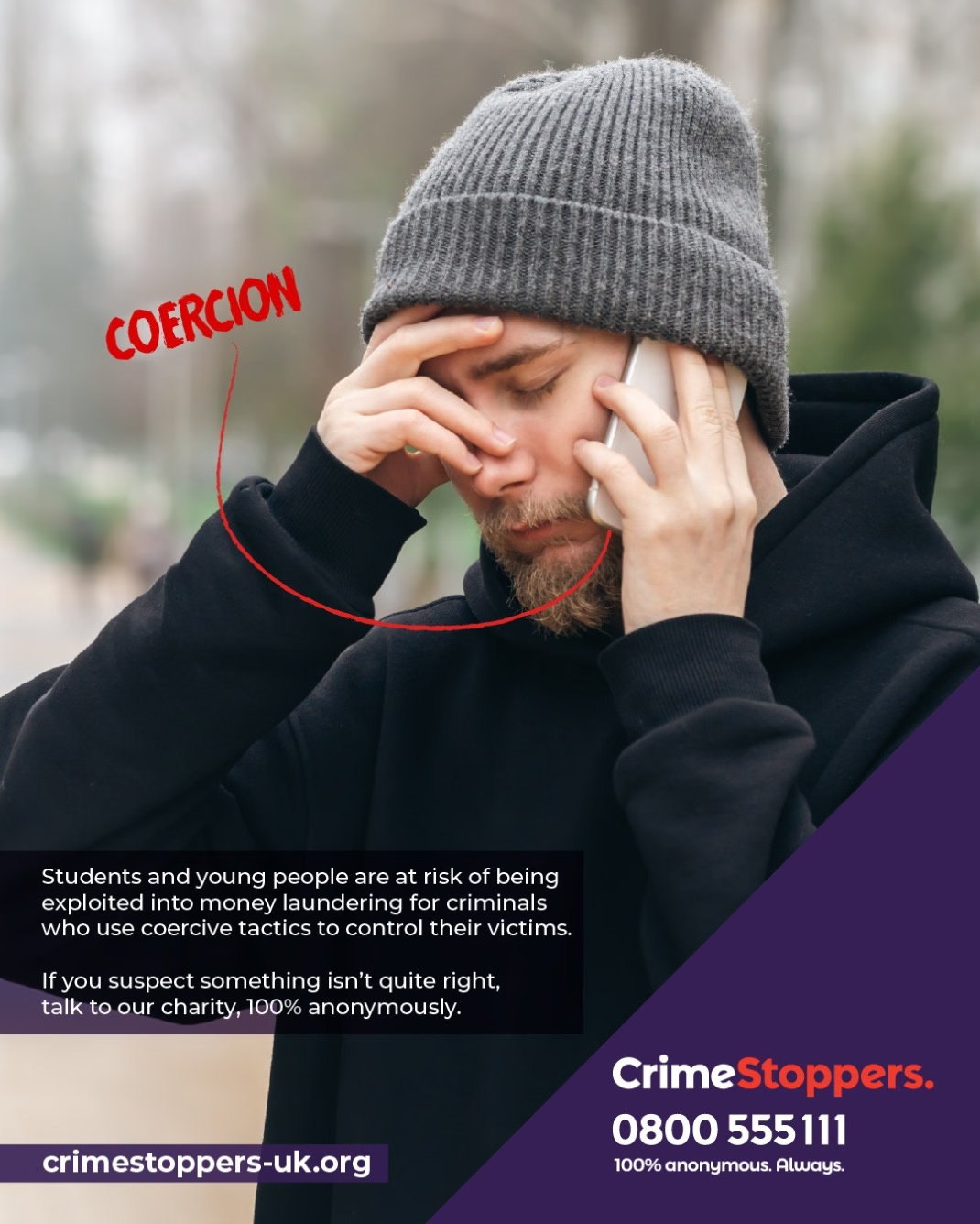
Criminals coerce students and young people into moving money through their bank account to help them launder their illegal cash.
- Fraud and exploitation
Young people are recruited into criminality through fake job ads or through grooming and coercion. Often it looks like a simply delivery job, but it’s actually part of a courier fraud operation stealing life savings from vulnerable people.
- Sexual exploitation
An abuser targets a vulnerable child, usually offering something in return for sexual activity - it might be food, money, vapes, drugs or gifts. The child is probably unaware that they are being exploited and abused.
Why early action matters
The earlier exploitation is recognised, the greater the chance of protecting someone from harm. Many young people caught up with criminal groups go missing multiple times, each time placing them at greater risk.
The longer exploitation continues, the harder it can be for them to leave. Speaking up could help interrupt this cycle. It could protect a child, support a family, and help disrupt the criminal networks responsible.
Why Crimestoppers?
If you have information or concerns about a child or young person being exploited, you can contact us here at national charity Crimestoppers.
We're independent of the police - you will never have to speak to or deal with them.
You will remain 100% anonymous - guaranteed. We won’t ask for your name, and your details cannot be traced.
Your information is passed securely to law enforcement so they can take action. You may never know the outcome, but your voice could help protect someone from serious harm.
If a child is at immediate risk, call 999.
Support for victims and families
If you or someone you know may be affected by exploitation, support is available.
You are not alone.
- Victim Support is an independent charity in England and Wales that provides specialist practical and emotional support to victims and witnesses of crime.
- #LookCloser is a partnership campaign between The Children’s Society, the National County Lines Co-ordination Centre and British Transport Police, encouraging everyone to learn the signs of child exploitation and how to report it if worried, including here on our anonymous online form.
- Catch 22 is a specialist support and rescue service for young people and their families who are criminally exploited through county lines.
- The SafeCall service, run by charity Missing People, offers confidential, non-judgemental support to young people and their families.
- For more advice on drugs, their effects and the law, talk to Frank.