Crimestoppers
 Fearless - our youth service
Waste crime negatively impacts quality of life, new survey shows
Specially-commissioned survey shows that over half of people in England say waste crime negatively impacts their quality of life.
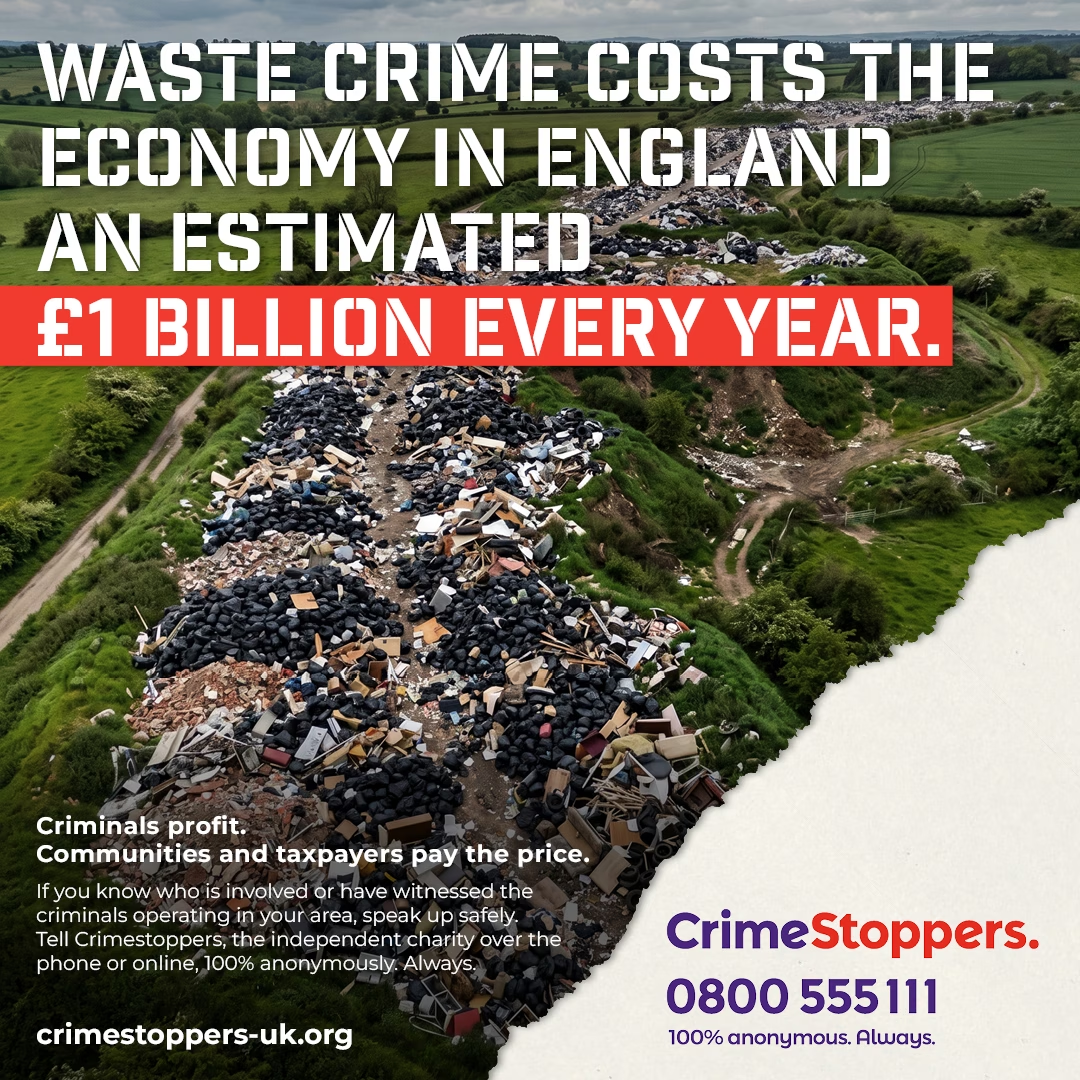
Crimestoppers has commissioned new You-Gov research, which states that nearly two-thirds of people in England have noticed some form of waste crime in the last year, including fly‑tipping, illegal dumping and unregulated waste sites. Over half (52%) of adults say they have seen dumped household or commercial waste in their local area, while nearly a quarter (23%) report witnessing illegal waste sites or dumping on land.
To tackle this, Crimestoppers has launched a new national campaign, in partnership with Defra and the Environment Agency, to urge the public to speak up anonymously about those responsible and help keep their communities safer by fighting to stop large-scale waste dumping.
The research shows waste crime is not just an eyesore - it is actively damaging communities. Over half (53%) of people say waste crime negatively affects their quality of life, and more than two in five people (45%) agree that it makes their local area feel unsafe.
The connection with organised crime
A government-commissioned review found that those running illegal waste operations are frequently involved in other serious criminal activity, including large-scale fraud, money laundering and, in some cases, modern slavery.
Waste crime is a serious and growing form of organised crime. According to Defra, more than 52,000 large-scale fly-tipping incidents, equivalent to a tipper lorry or more, were recorded in 2024/25, costing councils £19.3 million to clear. The Environmental Services Association estimates waste crime costs the UK economy around £1 billion every year.
The campaign
This new campaign supports Defra’s recently published Waste Crime Action Plan, which sets out a strengthened, zero-tolerance approach focused on prevention, enforcement and clean-up. Through the campaign, as an independent charity, we're urging the public to play a vital role in tackling waste crime by sharing what they know 100% anonymously. We will never ask who people are and have no way of tracking information back to the person who spoke up - we just want to know what you know or have seen.
Information from the public can help identify those responsible for large-scale illegal dumping and prevent further harm to communities and the environment.
“Waste crime is not a harmless crime. It is often driven by organised crime gangs making huge profits at the expense of our communities and environment.
“The fact that so many people are seeing this in their local area shows just how widespread the issue has become.“We know that people may feel unsure about reporting what they’ve seen or worry about repercussions. That’s why our charity exists. We give people a safe anonymous way to speak up about those people harming our environment. The information we pass on could help stop the waste criminals and prevent large-scale waste dumping before it happens.”
Kate Johnston, Crimestoppers Director of Business Development
Waste Minister Mary Creagh said:
"Waste crime blights our towns, cities and countryside. New research from Crimestoppers shows the scale of the problem, with nearly two-thirds of people in England witnessing it in the past year.
"This campaign, part of this government’s Waste Crime Action Plan, is clear: if you see waste crime, report it and help us crack down on the waste criminals. Working together, we can protect each other and clean up Britain."
“Waste criminals are motivated by profit, with little regard for the impact their actions have on local communities and the environment.
“Our 10-point plan to tackle waste crime is strengthening enforcement, disrupting criminal activity and supporting legitimate operators, but intelligence from the public remains vital.
“We have seen how members of the public often have valuable information about suspicious activity but feel unable to come forward. Through our Crimestoppers campaign, people can report concerns completely anonymously, helping us gather intelligence that will bring offenders to justice.”
Philip Duffy, Chief Executive of the Environment Agency
20 May 2026